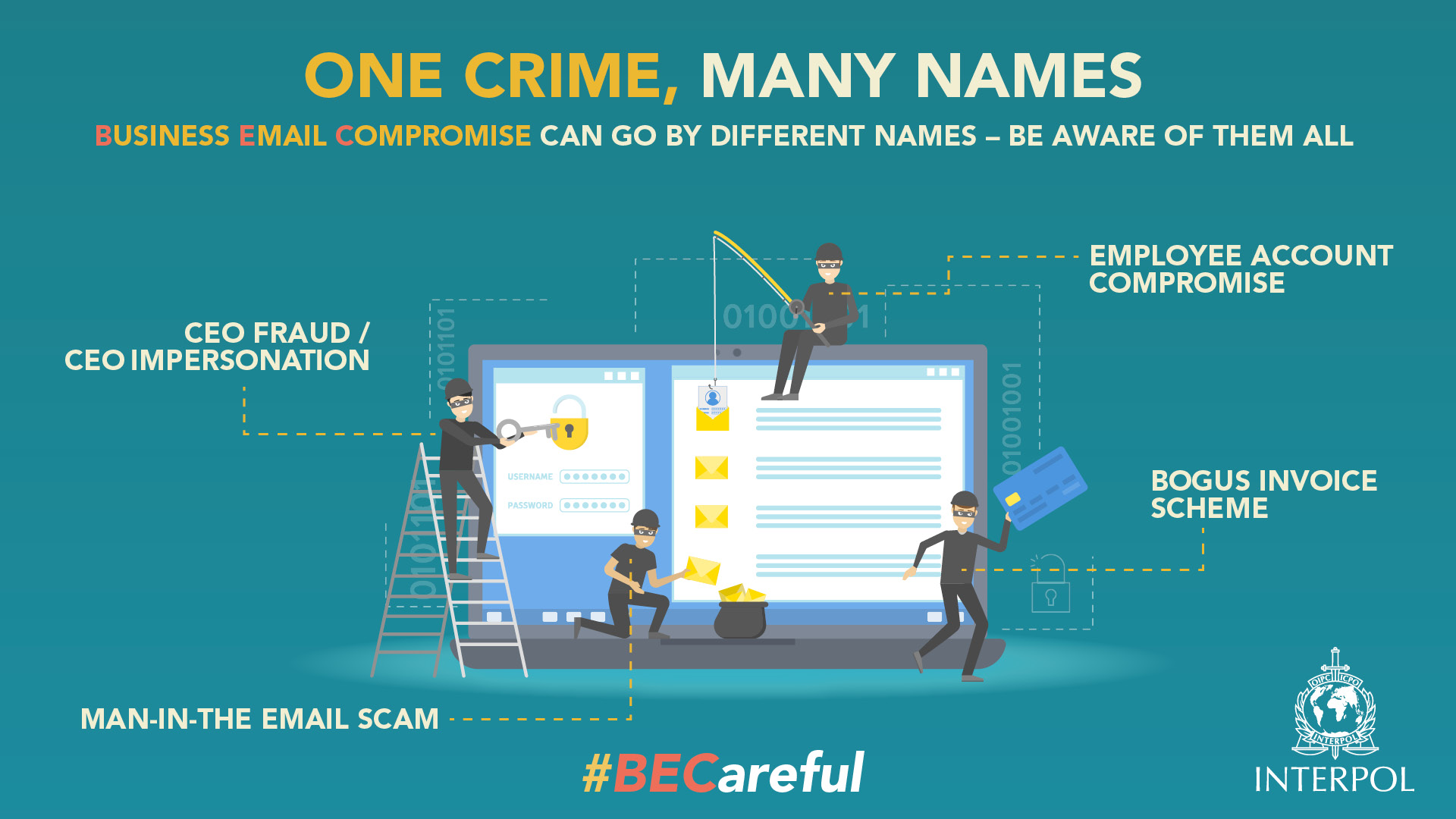
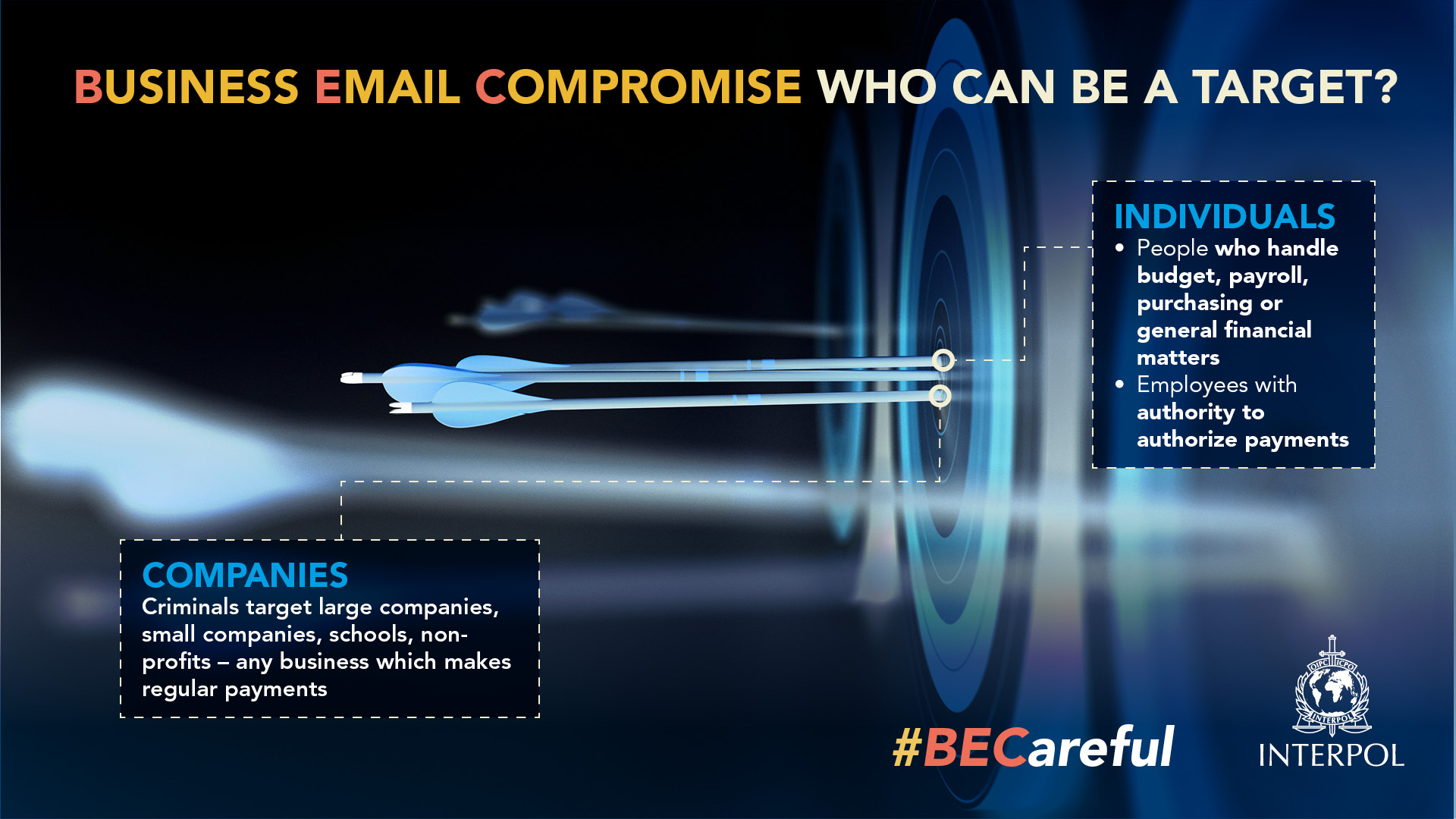
Business Email Compromise (BEC) — also known as “Email-Scam” or “CEO-Fraud” — poses a serious threat to businesses, companies and individuals on a global scale, and is one of the most prominent cyber threats today.
A serious global threat to businesses and individuals.
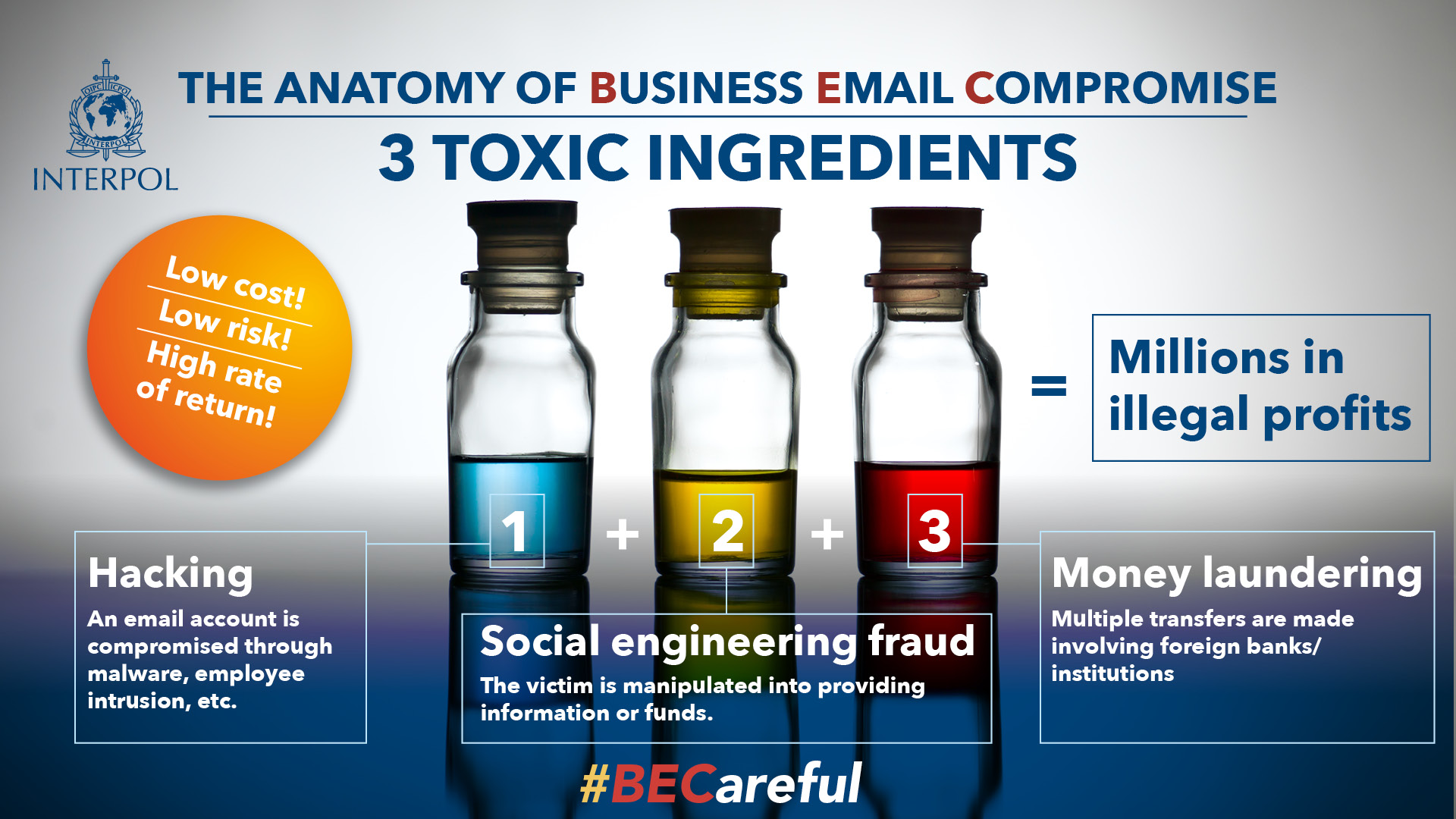
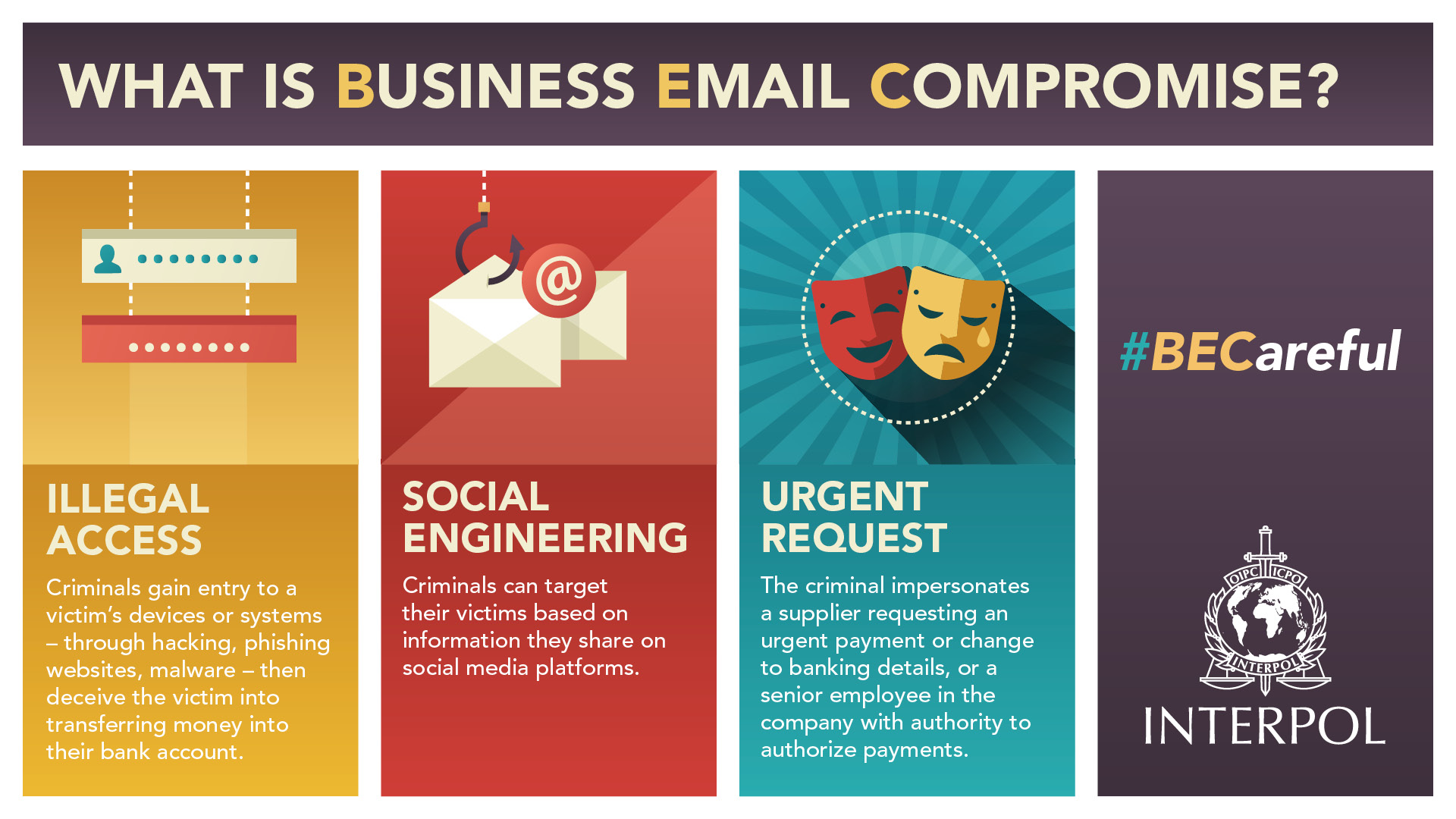
BEC criminals research their targets, then use carefully crafted emails to trick staff into transferring money or revealing sensitive information.
CEO Fraud
An email appearing to come from a senior executive instructs staff to make an urgent, confidential payment — often while the executive is travelling or unavailable.
Invoice Fraud
Criminals impersonate a regular supplier and advise that bank account details have changed, diverting legitimate invoice payments to accounts they control.
Email Account Compromise
A genuine business email account is hacked and used to request payments or sensitive information from customers, suppliers and colleagues.
Warning signs
Recognise a BEC attempt before money moves.
Train every member of staff who handles payments or sensitive information to stop and check when they see these red flags.
Red flags in the email
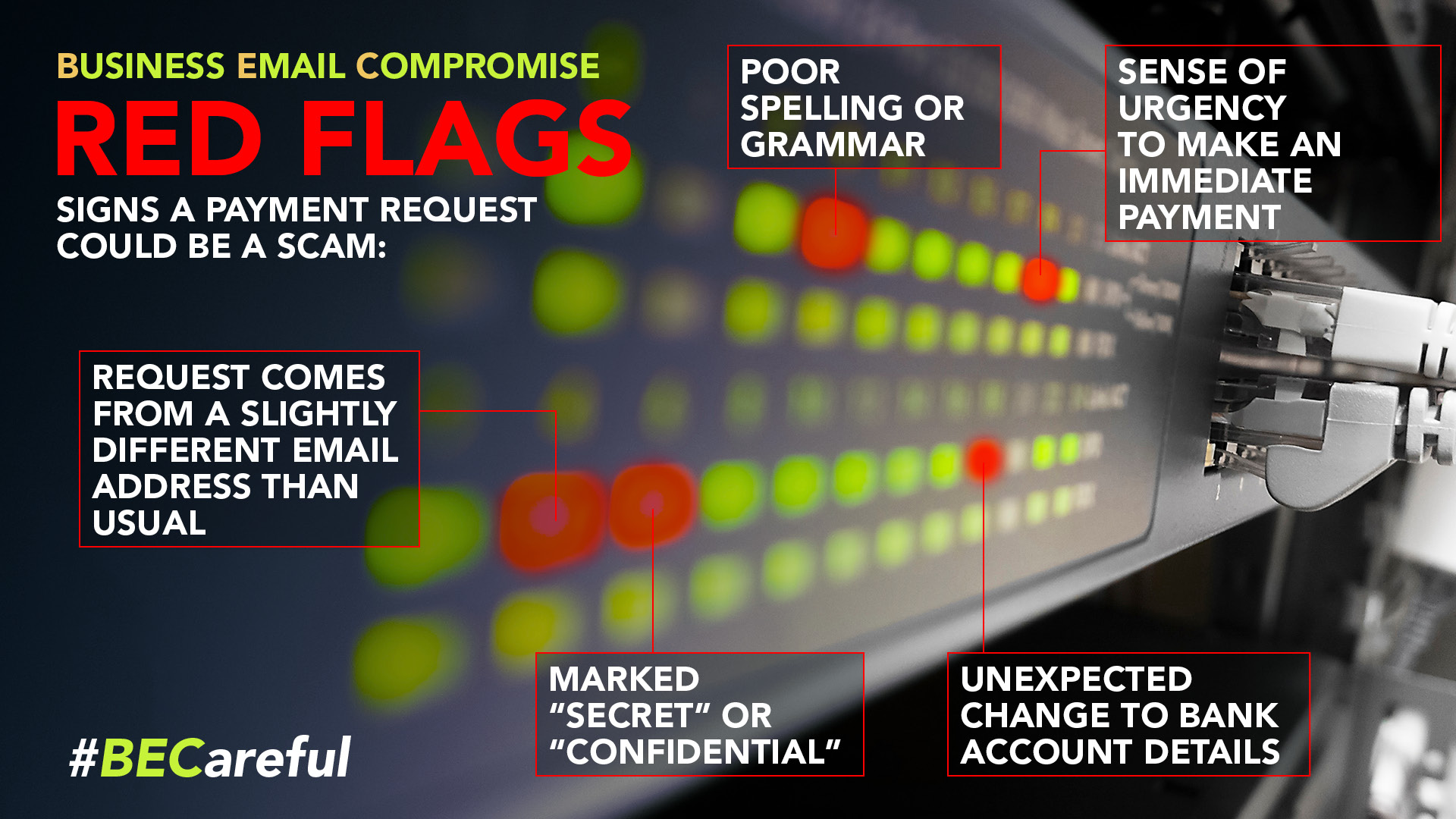
Unexpected urgency, secrecy or pressure to act immediately
Requests to bypass normal payment procedures
Supplier bank account details that have suddenly changed
Sender email addresses that are slightly misspelled or altered
Payment requests sent late in the day or before weekends
Requests for confidentiality — “do not discuss with colleagues”
If something feels wrong
Stop — do not action the payment
Verify the request by phoning the person on a known number
Never use contact details supplied in the suspicious email
Tell your manager and IT/security team immediately
Contact your bank promptly if money has been sent
Preserve the email and evidence for reporting
#BECareful campaign
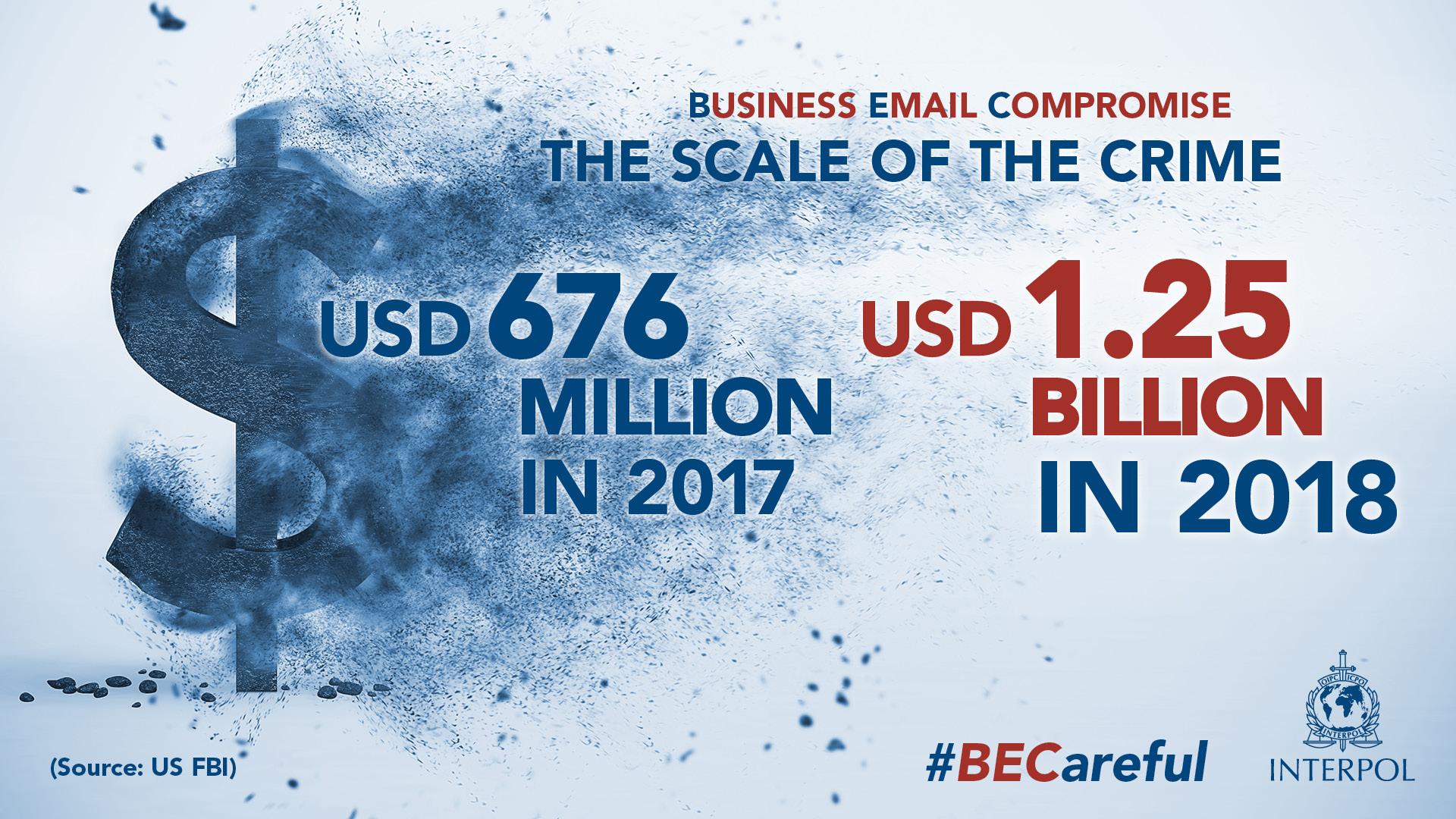
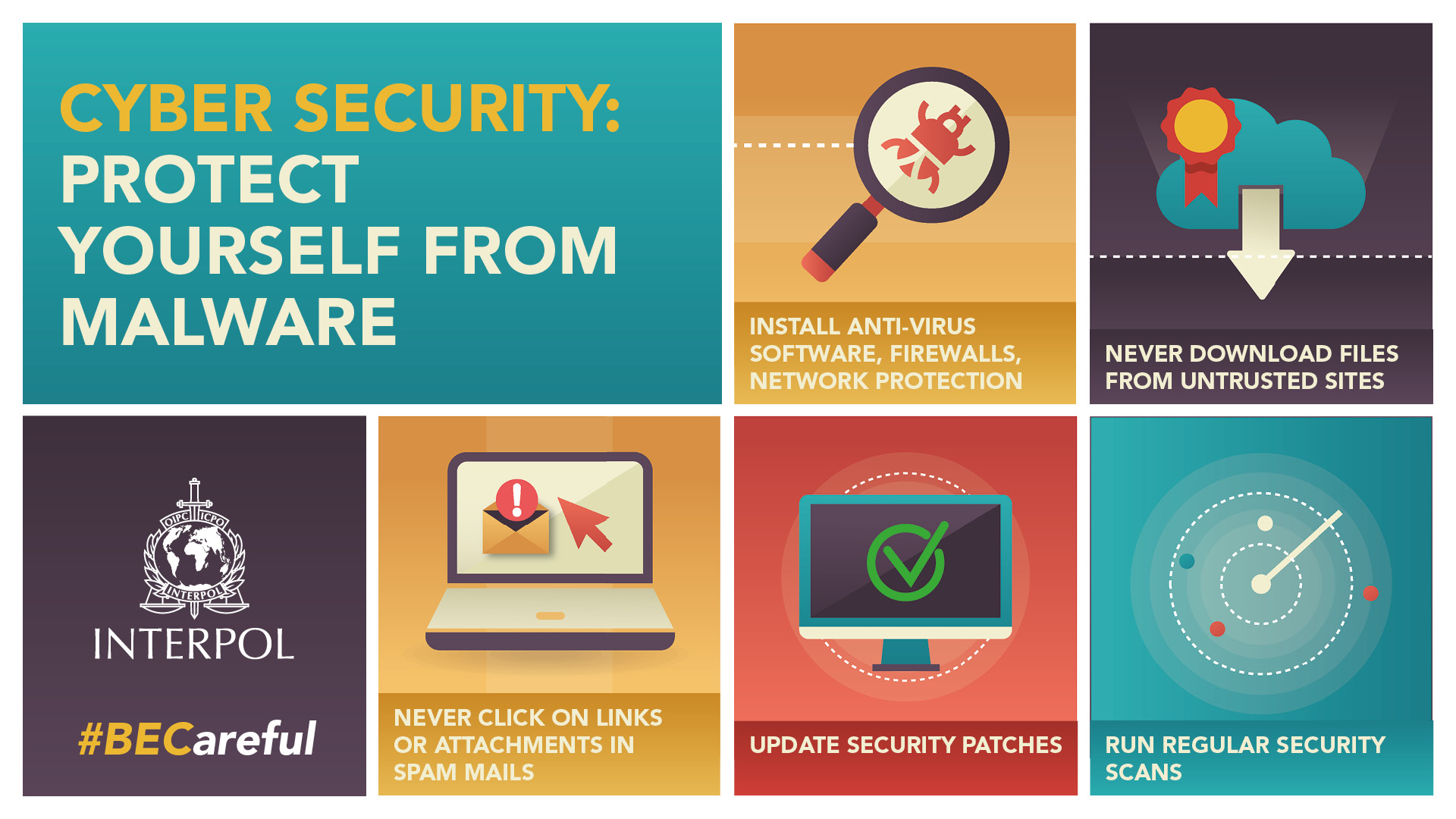
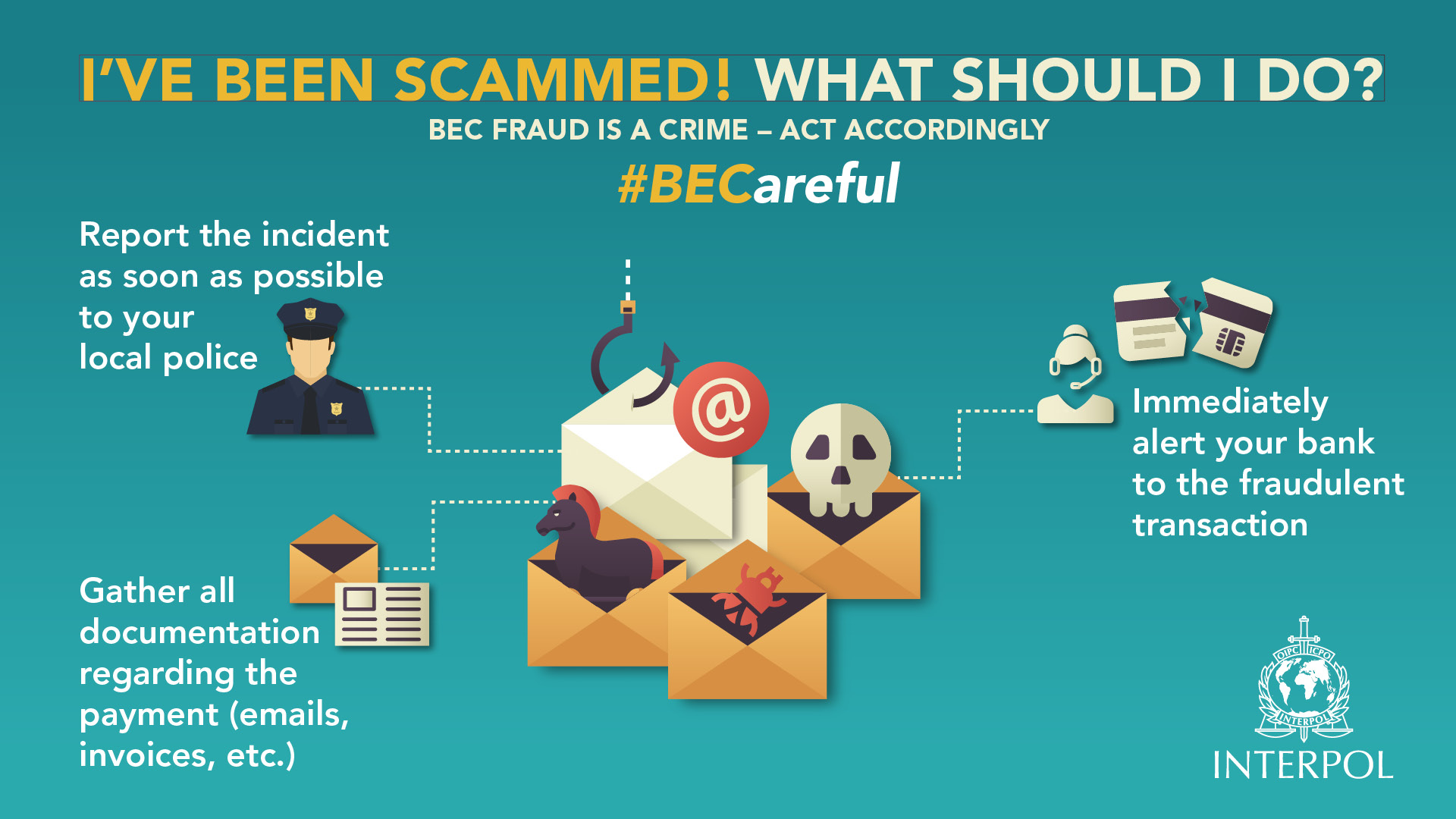
BEC awareness infographics.
Awareness material illustrating how Business Email Compromise works and how to protect your organisation. Click any image to view it full size.
Protect your business
Simple controls that defeat most BEC attempts.
Most BEC losses are preventable with verification procedures, staff awareness and basic email security.
Verify by phone
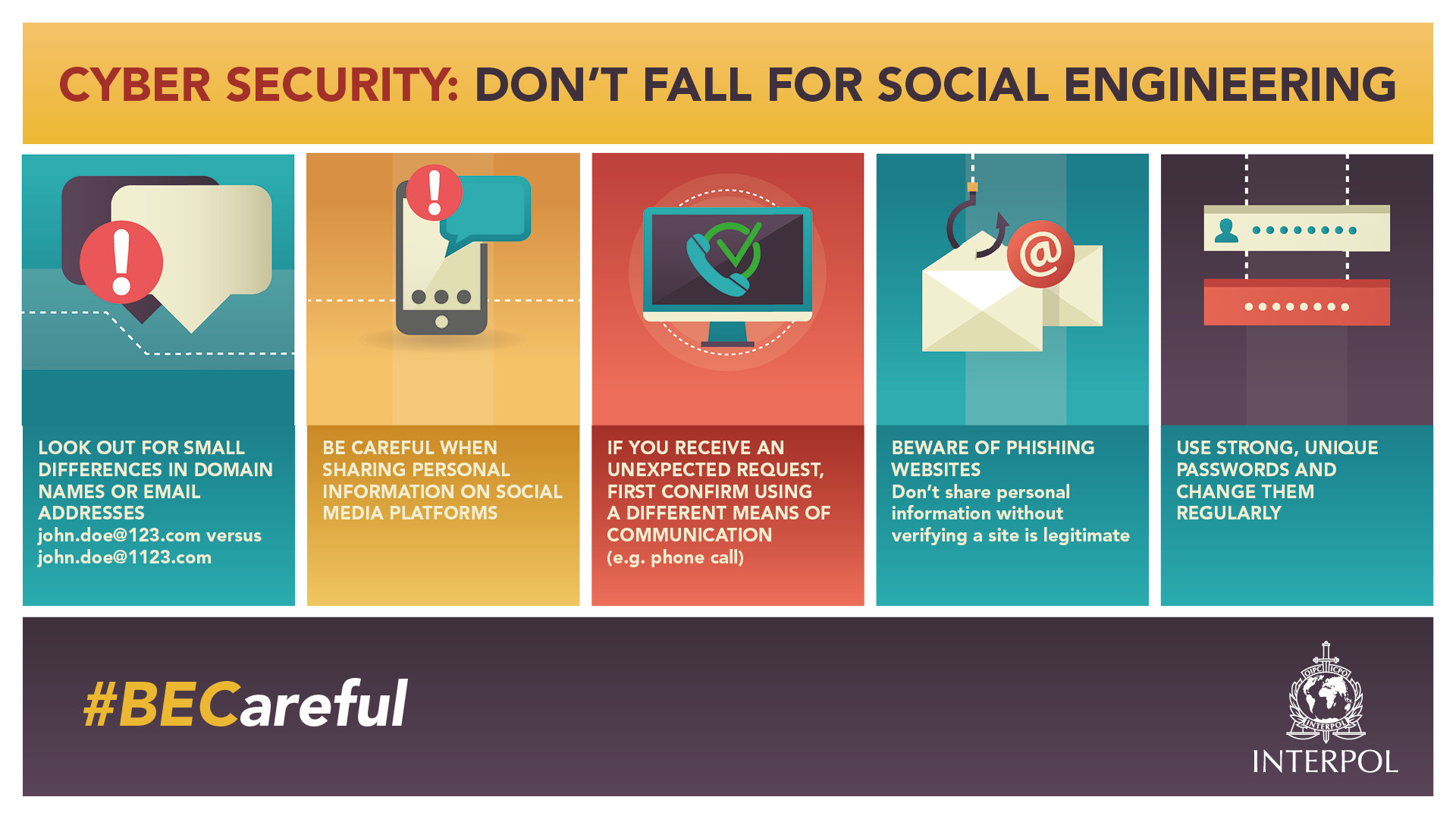
Always confirm payment requests and bank detail changes by calling the requester on a trusted, independently sourced number.
Four-eyes principle
Require two people to approve payments and changes to supplier details, with no exceptions for urgent requests.
Train your staff
Run regular awareness training so everyone who handles payments can recognise and report BEC attempts.
Secure your email
Use strong, unique passwords and multi-factor authentication, and keep systems and software up to date.
Check addresses carefully
Inspect sender addresses character by character — criminals register lookalike domains that differ by one letter.
Report every attempt
Report attempted and successful BEC scams to the FIU, whether or not any money was lost.
Targeted by a BEC scam?
Report it to the Cook Islands Financial Intelligence Unit immediately — whether or not money was lost. Early reporting helps recover funds and protect others.